In the Zona
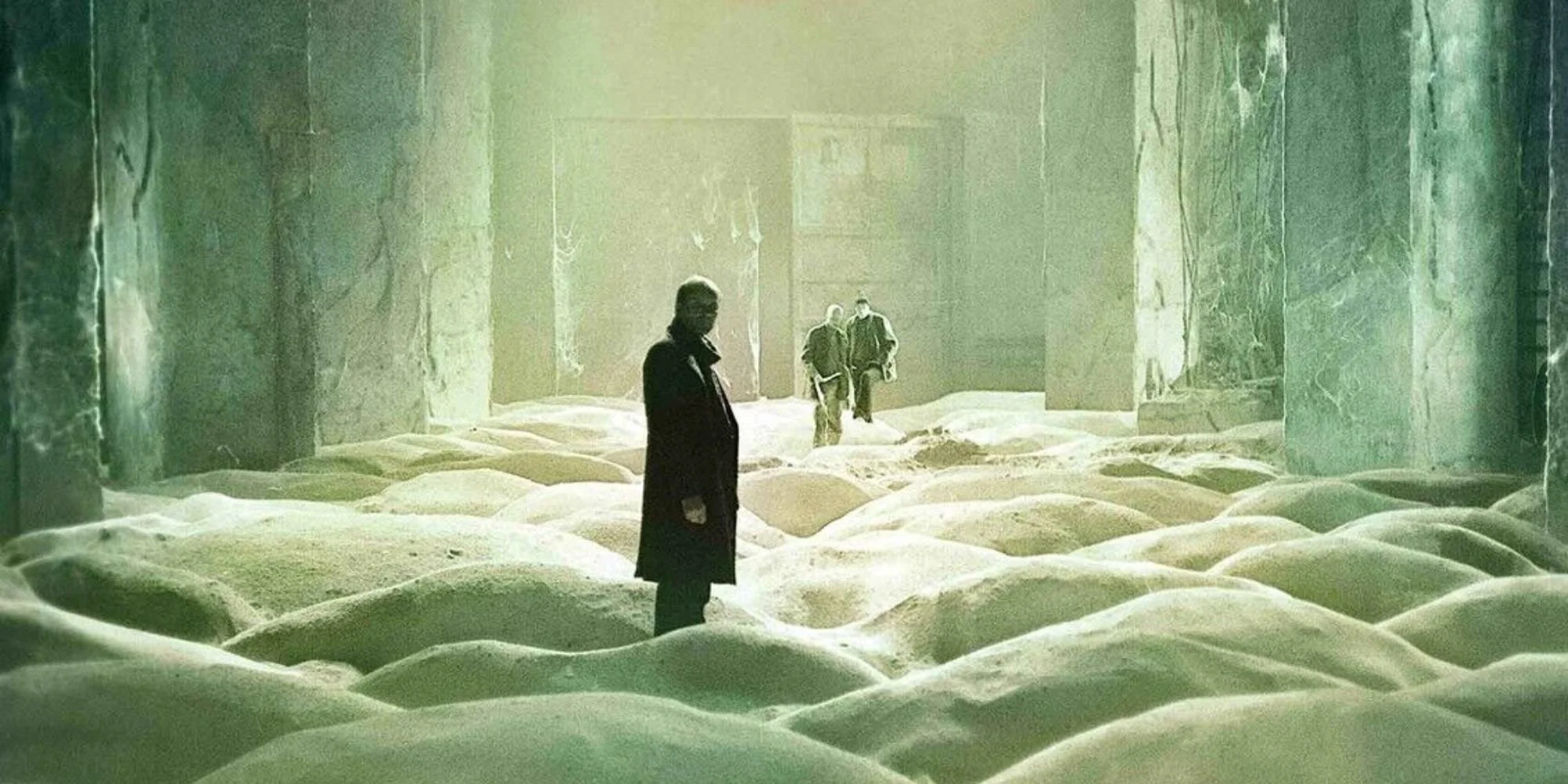
Stalker (1978), dir. Andrei Tarkovsky.
You’ve been telling yourself and others that you enjoy certain works of high culture: fine art, literary novels, arthouse cinema, serious music—the main point being that these things you enjoy have aesthetic, intellectual, moral, and experiential merits well beyond what mass-market entertainment can offer. Then there’s the implication, whether intended or not, that enjoying such works sets you apart from the masses who strictly enjoy pop culture. Because those works are known to be less accessible and harder to enjoy, literally.
If this is true for you, then you might have had, on occasion, a second-order experience that’s humbling and not very pleasant. While viewing one of those works of high culture (or reading it, or listening to it, etc.), you found yourself asking: Do I actually like this?
Like, do I really?
In other words, you experienced one of the symptoms of what’s commonly known as imposter syndrome, which is particularly funny and stupid in this context, because barring the few people whose job it is to watch films, read books, or listen to music, you’re presumably engaging in those activities as a form of recreation. So who’s keeping tabs on whether you’re an imposter?
It turns out, you are. Because you care about being authentic™.
You don’t need to justify enjoying an action blockbuster or an algorithmically optimized stream of Instagram videos, any more than you need to justify enjoying sex or chocolate ice cream. Self-evident pleasures, those are.
But when it comes to reading a slow paced 700-page novel or watching a three-hour art film in which, as it were, nothing happens, a justification might be required. By you, mostly.
This experience can happen during any form of high culture engagement. But it’s more likely to happen, in my experience, at the cinema.
Picture this. You’ve picked an art film to see for the evening (by now, you’ve undoubtedly noticed my very choosing of the word ‘film’ instead of ‘movie’ is deliberate and somewhat pretentious). You’ve bought a ticket and took a seat among your fellow self-proclaimed cinephiles (and a few unwitting normal cinema-goers who are seeing this nothing-will-happen film on a whim and will soon be very upset. You will also be upset, but for different reasons).
For the most part, you’ve gotten away with outsourcing your highbrow film knowledge to a few secondary sources that you trust; typically, TikTok summaries, or, if an intellectual mood strikes, YouTube. No need for that now. You’re here at the cinema, ready to form your own opinion.
You’ve set your cellphone to silent, not out of politeness, nor because it said to do so on the screen–it’s an ablution, a part of the ritual.
At the conclusion of the ads and previews, when the room darkens and the curtains move to match the film’s aspect ratio, you find yourself sitting upright, through reflex, like the film-loving hamster that you are.
You’re trying your best to assume the physical and spiritual posture of an active spectator. Good!
The catch, of course, is that you’re about to face your worst demons. Shortly into the film, after you’ve noticed how agonizingly slow and boring it is, and after your best attempts to latch onto any kind of plot have failed, you realize that every morsel of your being is begging to be somewhere else–anywhere but in this dark room, watching the canonical film you’re supposed to like, or at the very least, appreciate.
Even worse, if you buckle in and get through to the end without once dozing off, you could face a bigger problem. You might come away with the conclusion that you don’t get it. This is one of the best films of all time, but you haven’t the foggiest.
If you’ve never had this experience; meaning, if your convictions with regard to the high culture you consume are unshakable and free of doubt, then I’m afraid you’re too far gone. It’s time to extract your head out of your backside. Surgically, if necessary.
What actually happened.
A friend and I went to see Stalker (1979) at the cinema. I’d seen it once before, years ago, and didn’t remember much at all. She hadn’t seen it. For simplicity, let’s assume neither of us had.
We were aware of its reputation: that it’s long, slow-paced, difficult, and highly acclaimed.
Try as you might, you’ll always go into these things carrying other people’s baggage. It makes experiencing the artwork feel like a litmus test. Whether or not you like it (or understand it) will say something about you. You will belong to one camp instead of another. All the more so if you identify yourself with your experience of that art form, as I tried to convey at the beginning.
It’s unproductive and, in my opinion, antithetical to what a pure experience of art might be like.
I want to share my thoughts as I watched Stalker, the impression it left me with afterward, and some of my friend’s thoughts (not verbatim), which she shared with me. It’s less a review of Stalker than my general feelings about experiencing films that are long, slow, and demanding.
Luckily, the film is so long and slow that you could comfortably go through an elaborate thought process and not really miss anything. I practically drafted the outline of this blog post in my head while watching it. It’s really that slow (N.B. I think there are at least a few shots long enough to take a bathroom break and come back to your seat before the next cut).
If you think I’d already set myself up for failure, vis-à-vis enjoying (or understanding) the film, because I’ve just admitted to having been inattentive and in my own head, just you wait.
Many slow and uneventful films get a pass, as far as enjoyability goes, because they are audio-visually stunning, whether or not they have other merits (There are examples, but name-dropping could undermine my argument). Stalker is very nicely shot, but, in my opinion, not to the point of being, strictly speaking, cinematic eye-and-ear candy.
What else, besides it being slow and somewhat nice to look at? Scattered throughout the film, especially towards the end, are some reflections on human nature, the pointlessness of life, and other philosophical topics. Not through allegory or subtext (that’s for the viewer to decide), but through verbal reflections expressed in dialogue and monologue.
This too is nice, but at face value, not all that deep. All of the film’s rhetorical wisdom–its verbal declarations–could fit into a few proverbs. Most of them, outside of the film, would sound or read like platitudes, I think.
So really, what’s the catch? I’ll put myself in the shoes of someone who’s seen Stalker and asked that question in earnest–someone, in other words, who didn’t get the hype at all. At some points and to varying degrees, both my friend and I felt that way (insofar as I could infer from our discussion).
It’s easy to see that Stalker is well-shot, well-scored, and well-edited. The acting, to say the least, is also decent. We’re not exactly dealing with three hours of The Room or Neil Breen here. This is, by all means, a technically sound film.
It’s also not offensive in any obvious way. It depicts a desolate environment and morose characters. But it’s not misery porn by any stretch, and there’s nothing distasteful about it.
The obvious complaints would be related to its lack of coherent plot, its excessive length, its pacing, and things of that nature. One could say (if they wanted to) that it drags on for way too long given how much substance it has; substance, or content, or story– the crux of the complaint being that it doesn’t justify itself well enough, especially given its length (the phrase “not worth the paper it’s printed on”, in the context of books, comes to mind.). By extension, and this would be the more obviously flawed complaint, which is that it doesn’t justify its reputation, the flaw of course being that the artwork (or its maker, who is dead, incidentally) is scarcely responsible for that reputation.
Therefore, and this is important, it’s pretentious. You’ve heard this before and probably said it yourself about some piece of artwork or literature. I barely know what that word means anymore myself. But I did try to think what it could imply (as opposed to what it literally means) if it were true of Stalker. This is honestly what went through my mind in the film’s first 40 minutes or so.
If it was pretentious, undeserving of the praise it received, then people’s fascination with it–both critics and audiences–is arbitrary. Or, it’s fully manufactured, for whatever reason. If the cultural intelligentsia had decided that any other slow-paced Soviet experimental film was to occupy that spot (one of the best films of all time, according to many), then they could have done it, and we would have been none the wiser
It’s an interesting insinuation. I sat there in the cinema thinking: if I had 15 hours to spare and enough patience, and was shown five random Soviet films from the 70s or 80s of roughly the same runtime and genre, not knowing anything else about them, would I have singled out Stalker as the standout? Like it was a police lineup, checking to see if I was a reliable eyewitness–a real cinephile.
I think at least part of calling a film like that pretentious seems to suggest that no, neither I nor anyone with more film acumen could independently appreciate this film in such a controlled experiment.
Right?
Think about it.
This was my attempt, I think, to show someone how not to write-off a film like that immediately. As much as you need to be skeptical about expert opinion on art, you should also be skeptical about your own initial reactions, especially if you're aware of expert opinion.
For what it’s worth, I did come out the other end truly loving Stalker. But in trying to explain why, I’m coming up short. Let’s just save face and say that that’s part of the point I’m trying to make. What I can say, though, is that it’s not because I understood the film’s plot or its subtext anymore than someone who hated it, nor because I’m knowledgable about the film’s cultural or historical contexts. I know fuck all about Soviet cinema and I haven’t seen other films by Andrei Tarkovsky. I loved it just because.
“Art is not only about something; it is something. A work of art is a thing in the world, not just text or commentary on the world... the knowledge that we gain through art is of the form or style of knowing something, rather than a knowledge of something (like a fact or a moral judgement) in itself... the gratification they [works of art] impart on us is of another order. It is an experience of the qualities or forms of human consciousness.”
— Susan Sontag, On Style